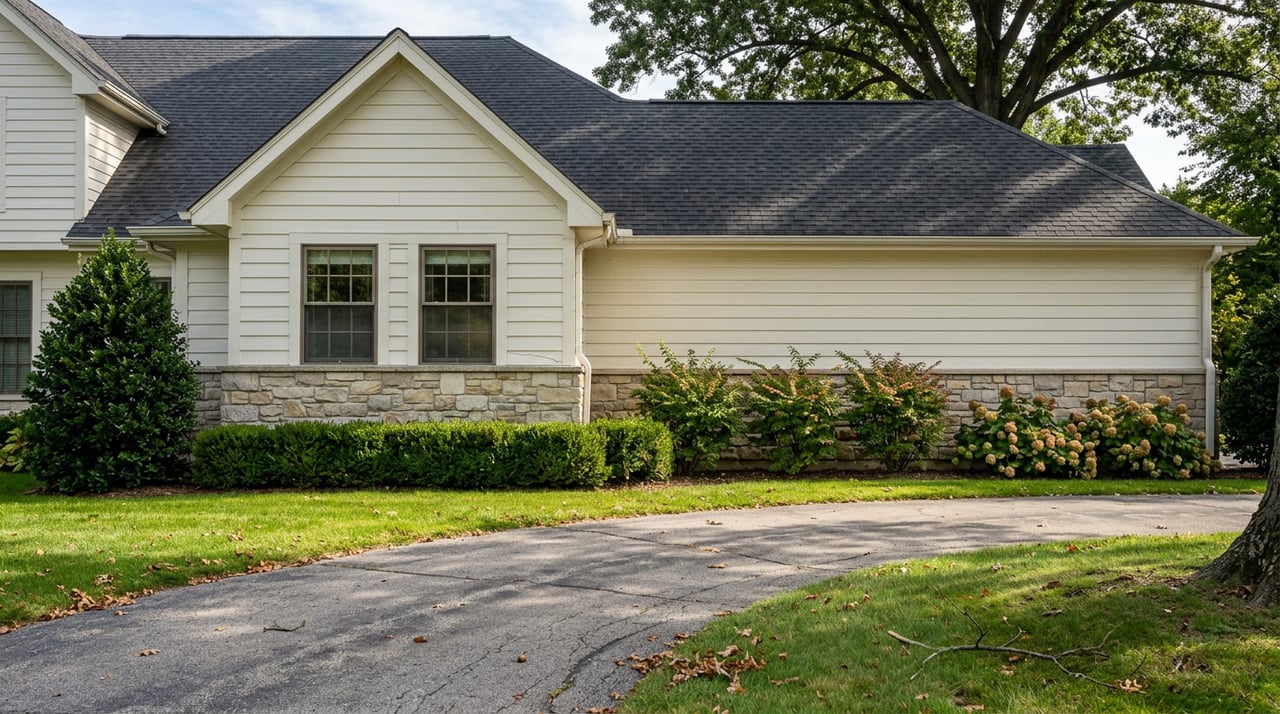
For decades, selling a home on a septic system in Fairfax Station meant one phone call. A technician would walk the yard, probe the soil near the drain field, glance at the tank lid, and hand over a certificate. The whole thing could run under $100 and take less than an hour. That certificate satisfied Paragraph 17 of the Virginia REALTORS contract, the seller moved on, and the buyer rarely asked more questions.
That walkover is gone. As of July 1, 2025, Virginia's House Bill 2671 sets a legal minimum for what a septic inspection has to include when it's requested as part of a real estate sale, and the old visual-and-probe report no longer meets that bar. If you own a well-and-septic property anywhere from Fairfax Station to Clifton to the older, unsewered pockets tucked into Fairfax County, the paperwork you plan to hand a buyer next spring is not the paperwork your neighbor handed one three years ago.
What the law actually requires
HB 2671 was signed by Governor Youngkin on March 20, 2025, and took effect that July. It amended sections 59.1-310.7 through 59.1-310.10 of the Code of Virginia, and the changes are specific rather than vague. According to Virginia REALTORS' own explainer, an inspection performed as a condition of sale now has to meet a defined standard, and the association updated its septic addendum, Form 600M, to reflect it.
Here is what changed in practice:
- Only a licensed professional can sign off. The inspector must hold a valid Onsite Sewage System Operator, Onsite Sewage System Installer, or Onsite Soil Evaluator license through the Virginia Department of Professional and Occupational Regulation. A general home inspector checking a box on a whole-house report no longer qualifies.
- A written contract comes first. Before any inspection happens, the inspector has to provide a signed agreement describing the scope of work, the cost, and whether pumping the tank is included.
- The tank generally has to be pumped. A full evaluation of the inlet and outlet baffles, the tank condition, and the distribution box typically requires pumping first. If pumping is excluded from the scope, that has to be stated in writing.
- The report is due within 10 business days, and it has to document every readily accessible component: the septic tank, pump tank, distribution devices, treatment units, control panels, and the dispersal field.
- The inspector cannot tell you whether the system passed. This is the part that surprises most sellers. The statutory text specifically bars authorized inspectors from issuing pass or fail determinations or graded functionality assessments. You get a documented condition report, not a verdict, which means the negotiation happens around specific findings rather than a single word.
The Richmond Association of REALTORS put it plainly in its own member update: the visual inspection of the drainfield surface with rod probing is no longer an option in its regional purchase agreement. That single line captures the whole shift. The cheap version isn't a lesser choice on the menu anymore. It isn't on the menu.
Old inspection versus new inspection
| Pre-July 2025 walkover | HB 2671 inspection | |
|---|---|---|
| Who can perform it | Often any technician the seller hired | Must hold a DPOR operator, installer, or soil evaluator license |
| Contract required | Rarely | Yes, signed and in writing before work begins |
| Tank pumping | Not typical | Generally required for a complete evaluation |
| Components inspected | Visual check, soil probe near drain field | Tank, pump tank, distribution box, treatment units, control panels, dispersal field |
| Report | Simple certificate, often same day | Written report within 10 business days |
| Pass/fail stated | Yes, informally | No, by law |
| Typical cost | Under $100 | Roughly $300 to $500, trending toward $400 to $550 in Northern Virginia |
Why this lands harder in Fairfax Station than almost anywhere else
Fairfax County runs extensive public water and sewer through most of its footprint, but the western and southern edges never got connected. Fairfax Station, Clifton, and the neighborhoods scattered around Ox Road, the Compton Road corridor, and the older subdivisions near Burke Lake still rely on private wells and septic fields, many installed during the county's suburban building boom of the 1950s through 1980s. A concrete tank poured in 1975 has had fifty years to develop hairline cracks. A drain field compacted by decades of driveway traffic behaves differently under a full pump-out than it does under a soil probe.
The Fairfax County Health Department requires septic tanks to be pumped at least once every five years under Chapter 68.1 of the county code, and alternative onsite sewage systems face annual inspection with sampling every five years. Properties near the Occoquan Reservoir watershed face additional scrutiny because a failing system there affects drinking water for people well beyond the property line. None of that changed with HB 2671. What changed is that the point-of-sale inspection now has to actually engage with those same maintenance realities instead of skipping past them with a walkover.
If you're selling a home in one of the larger-lot communities where septic is standard rather than exceptional, the practical result is a longer runway. A pumping appointment has to be scheduled. The report takes up to ten business days. If the findings show deferred maintenance, that becomes a documented negotiation point rather than something a seller could once wave away with a same-day certificate.
The pricing signal is noisier than it looks
There's a second piece of this that matters if you're timing a sale. Fairfax Station doesn't transact in high volume. In January 2026, only 8 homes sold in the zip code, and that thin sample produced a median sale price of $1.1 million, a 22.9 percent jump from the same month a year earlier. By July 2026, the median list price had moved to $1.3 million, but the price per square foot had actually fallen 7 percent year over year. Two real numbers, two different directions, both technically accurate, both drawn from a market too small to smooth itself out month to month.
Compare that to the City of Fairfax, which sits on public water and sewer and sold at a median of $735,000 over the three months ending in May 2026. The gap between that figure and Fairfax Station's isn't just about acreage or finishes. It reflects a market where each closed sale swings the median more than it would somewhere with hundreds of monthly transactions. A seller who prices off last month's zip-code median in Fairfax Station is often pricing off two or three houses, not two or three hundred. That's exactly the kind of number a Pricing Strategy Advisor designation exists to catch before it becomes a listing mistake.
A practical order of operations
Real estate professionals working in septic-heavy markets across Virginia have converged on roughly the same sequence for getting ahead of HB 2671 rather than reacting to it mid-contract:
- Pull your maintenance history first. If you have receipts showing when the tank was last pumped, gather them before you call anyone. A system pumped within the last three to five years tells a very different story than one nobody can date.
- Schedule the inspection before you list, not after you're under contract. A pre-listing inspection means any findings become part of your pricing and marketing strategy instead of a surprise during a buyer's ten-business-day window.
- Know where the access points are. The law defines components as inspectable if they're reasonably accessible without digging or damage. If your access lids are buried under mulch or a deck addition, find that out now.
- Decide who pays before it becomes a negotiation. HB 2671 doesn't specify buyer or seller. In practice it gets negotiated the same way a home inspection contingency does.
- Build the ten-day report window into your closing calendar. A system that needs repair work can add real time to a transaction. Better to know in week one of listing prep than in week three of a ratified contract.
A few questions worth asking directly
Does this apply if my home is on public water and sewer? No. HB 2671 only applies to properties with septic systems. A home connected to Fairfax Water and county sewer isn't affected by any part of this law.
Who pays for the inspection, buyer or seller? The statute doesn't say. It's a negotiation point, the same way a general home inspection is, and it's often settled in the listing agreement or the purchase contract rather than dictated by law.
Does a failed component automatically kill the sale? No. The inspector documents conditions rather than issuing a verdict, and most findings become a repair negotiation rather than a deal breaker. Systems needing significant work can still close, just with more time and, often, a price adjustment built in.
Is the old rod-and-probe report accepted anywhere? Regional MLS systems have been retiring it from their standard purchase agreements as they update forms for HB 2671 compliance. The underlying state law sets one minimum standard statewide, which means the informal version isn't a reliable substitute anywhere in Virginia, including here in Northern Virginia.
Selling on well and septic doesn't have to be complicated, but it does have to be current
The homes that trade well in Fairfax Station and Clifton right now are the ones where the seller treated the septic system like the major mechanical component it is, not an afterthought handled with a sub-$100 phone call. Getting the inspection scheduled early, understanding what a licensed inspector will and won't tell you, and pricing against real, property-specific comparables instead of a thin zip-code median are the three things that keep a well-and-septic sale on schedule instead of stuck in week three of due diligence.
If you're weighing a sale on a larger lot in Fairfax Station, Clifton, or anywhere else in Fairfax County where septic is part of daily life, Katie Stowe combines Corcoran McEnearney's local backing with a Pricing Strategy Advisor's read on exactly this kind of market noise. Let me guide you home. Schedule a consultation and let's put a plan together before your listing date, not after your first showing.