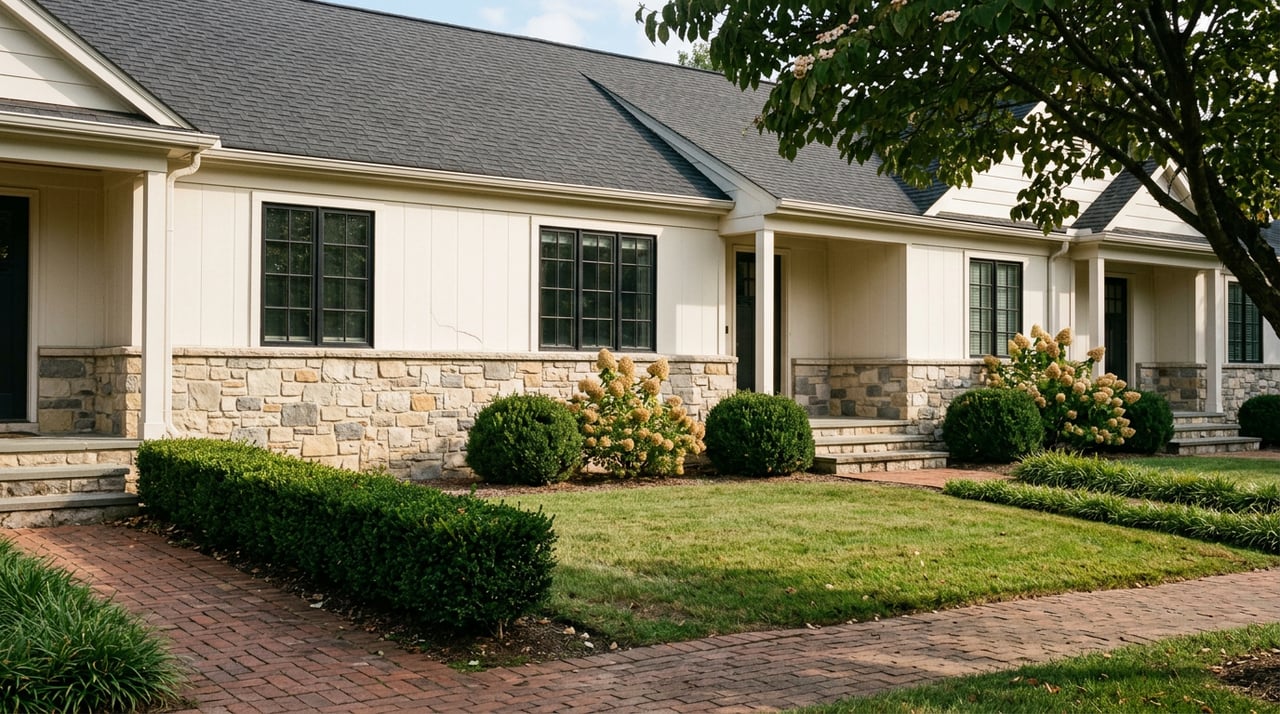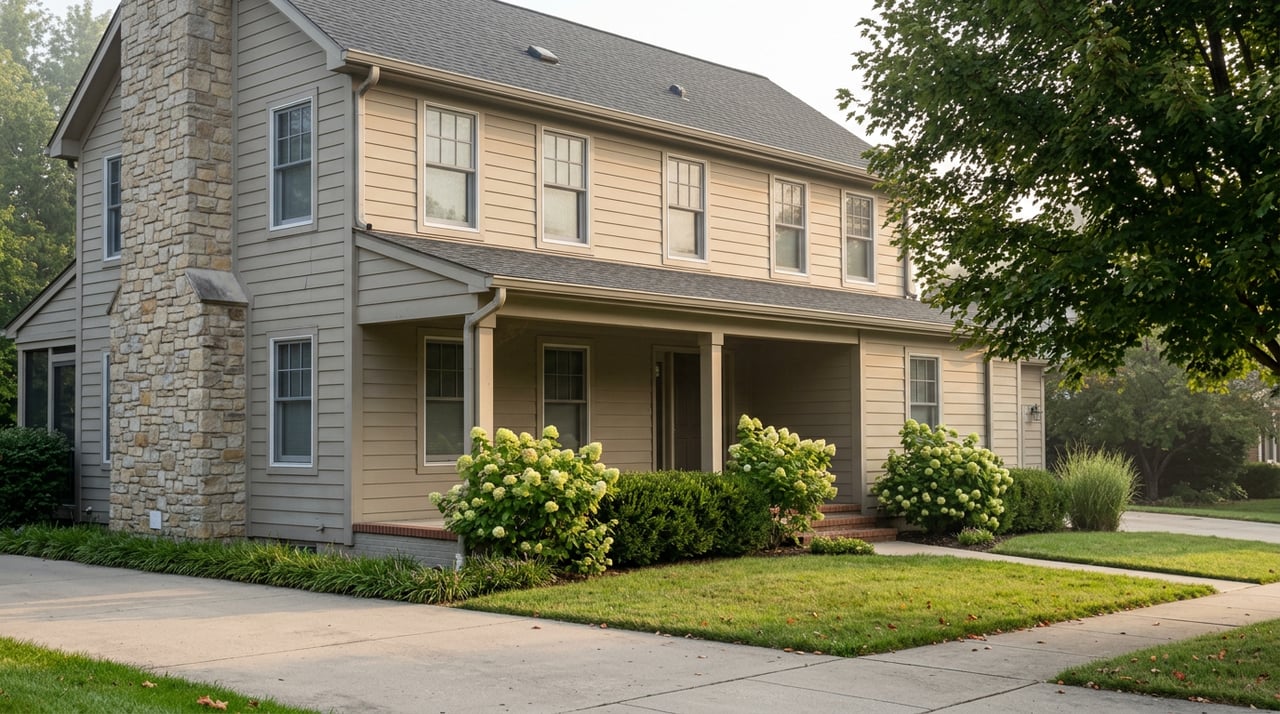
Two brick colonials, half a mile apart, both listed as "Fairfax, VA." Same era of construction, same school year starting in a few weeks, same commute into the Beltway. One owner pays a real estate tax bill calculated at $1.0725 per $100 of assessed value. The other pays $1.1225. Neither address has a city or county name in it that would tip you off. The portals just say Fairfax.
That gap is not a rounding error or a fluke of assessment timing. It is the result of two separate governments, each running its own budget, its own council votes, and its own tax rate, both operating under a name that buyers assume refers to one place. If you are comparing homes in this area on price alone, you are missing the variable that actually moves your monthly cost.
Same word, two governments
Virginia is unusual among states in that it has independent cities, jurisdictions that function as their own county rather than sitting inside one. The City of Fairfax is one of them. It covers roughly six square miles, runs its own council and school board contract, and is legally separate from Fairfax County even though the county surrounds it on every side. Everything outside that six-mile boundary, including McLean, Vienna, Oakton, Reston, and Tysons, falls under Fairfax County's government and its own tax rate.
So when a listing says "Fairfax," it could mean the independent city or it could mean unincorporated Fairfax County. The name tells you almost nothing about which government sets your tax bill, funds your local schools, or paves your street.
The nine months that decided this year's rate
The City of Fairfax's current tax rate is the product of a genuinely contentious budget season, and it is worth walking through because it explains why the number moved the way it did.
In February 2025, Acting City Manager Bryan Foster proposed raising the city's real estate tax rate from $1.03 to $1.125 per $100 of assessed value, a 9.5-cent jump. The driver was not discretionary spending. It was the city's contract with Fairfax County Public Schools, which operates the four schools inside city limits on the city's behalf. That tuition contract alone required $71.4 million in the FY2026 budget, and Foster warned the council that without other changes, the schools bill alone would have forced a 13.5-cent increase.
Then it got more dramatic. On March 11, the city council voted to advertise a maximum rate of $1.150, a full quarter above the current rate at the time, partly as a hedge against federal funding uncertainty. Residents pushed back hard at public hearings through April, and property owners recounted double-digit percentage increases in their tax bills over recent years. By the May 6 vote, the council had walked the number down to $1.055, a 2.5-cent increase rather than the 9.5 cents originally proposed. It passed 6-0.
That rate held through June 2026. In May 2026, the council adopted the next year's budget and set the rate now in effect, for the fiscal year that began this July, at $1.0725 per $100. It's a small further increase, but well below the $1.095 the council had advertised as its ceiling.
Where the two rates sit right now
Meanwhile, Fairfax County's Board of Supervisors set its own rate at $1.1225 per $100 for the fiscal year that ran through June 2026, and the county executive's proposed budget for the year now underway keeps that rate flat rather than raising it.
Put the two side by side and the picture for a buyer looking at homes in either jurisdiction today looks like this:
| City of Fairfax | Fairfax County | |
|---|---|---|
| Current real estate tax rate | $1.0725 per $100 | $1.1225 per $100 |
| Government structure | Independent city, own council | County government, Board of Supervisors |
| What drove this year's rate | Rising per-pupil tuition contract with FCPS | Rate held flat in proposed budget |
| Approximate population | 24,000 | Over 1 million |
The city's rate is now about 5 cents lower per $100 of assessed value than the county's, a gap that closed sharply and then reopened over the course of a single budget cycle. On a home assessed around $700,000, that difference works out to roughly $350 a year, not a dealbreaker on its own, but a number that compounds with every future budget season, and the city's own manager has already flagged that the schools contract could force another significant increase in the next year or two.
What the price-per-square-foot gap is actually telling you
Here is where the story gets more interesting than a simple tax comparison. Over the three months ending in May 2026, Fairfax County's median sale price ran close to $813,000, well above the City of Fairfax's median in the $710,000 to $735,000 range. On the surface, that reads like the county is the pricier place to buy.
But price per square foot flips the story. The City of Fairfax was running around $388 per square foot in recent data, while the county's figure sat closer to $362. Buyers in the city are paying more per square foot for smaller, generally older homes than buyers in the broader county, even though the city's total price tag is lower and its tax rate currently sits below the county's.
That combination only makes sense once you factor in what the city actually offers within its six square miles: walkable proximity to Old Town Fairfax's restaurants and shops, a housing stock built out decades ago on smaller lots, and a government small enough that residents can and do show up to budget hearings and move a proposed 9.5-cent increase down to 2.5 cents. The county's median price is pulled upward by newer, larger construction and by high-end pockets like McLean and Great Falls that sit inside county boundaries but bear no resemblance to a starter colonial off Fairfax Boulevard. Comparing the two medians directly tells you less than comparing what a dollar buys in each place, and right now a dollar in the city is buying less square footage but more walkable access to daily life.
The line runs through neighborhoods, not just a map
If you're comparing specific addresses, the jurisdiction question is worth settling before you get attached to a house, not after. The City of Fairfax's own government site and Fairfax County's tax administration each maintain address lookup tools that will tell you definitively which government levies your bill, funds your trash pickup, and sets your school assignment through the FCPS contract.
It also matters for what gets built around you. The city is currently moving forward on the George Snyder Trail, a two-mile shared-use path connecting Chain Bridge Road to the Wilcoxon Trail near Draper Drive, funded in part by a $9.5 million Smart Scale grant awarded in 2025, with design work beginning in fiscal year 2026 and construction expected by 2029. The trail is meant to link directly into the Northfax redevelopment area along Route 123, a stretch the city has been trying to reshape into a walkable mixed-use district for years. That is exactly the kind of capital commitment a small independent city can move on in a way a much larger county government often cannot, and it is also exactly the kind of project that competes for the same budget dollars as the school tuition contract driving the tax rate conversation.
None of this shows up on a listing sheet. It shows up in council minutes, budget hearings, and the kind of local reporting that tracks a six-square-mile government's finances the way most people only track their own household's.
A few questions worth asking before you compare two "Fairfax" listings side by side
How do I find out if a specific address is in the City of Fairfax or the county? Both governments maintain online tax and address lookup tools tied to parcel records, and the distinction is definitive rather than a matter of interpretation.
Does the tax rate difference mean the city is cheaper overall? Not necessarily. The city's price per square foot currently runs higher than the county's, so a lower tax rate on a smaller, pricier-per-square-foot home can still net out close to a larger home in the county at a higher rate.
Could the rates flip again? The city's own budget documents have flagged more tuition-driven pressure ahead, and the county's flat rate is a proposal rather than a locked multi-year commitment. Both numbers are set annually and are worth checking again each spring.
Does living in the City of Fairfax change which schools my kids attend? The city's four schools are Fairfax County Public Schools facilities operated under a tuition contract between the two governments, so families move through the same FCPS system either way, funded through a different mechanism depending on the address.
If you are weighing a home in the City of Fairfax against one just over the line in the county, the sale price on the listing is only part of the math. The tax rate, the price per square foot, and the specific capital projects each government is funding all belong in the same conversation. That is the kind of comparison that benefits from someone who tracks both budgets, not just both listings.
Katie Stowe has spent years walking Northern Virginia buyers through exactly this kind of jurisdictional fine print, especially clients relocating on a deadline who don't have months to learn which government sets their bill. Let me guide you home. Schedule a consultation and we'll go through the specific parcels you're considering, line by line.